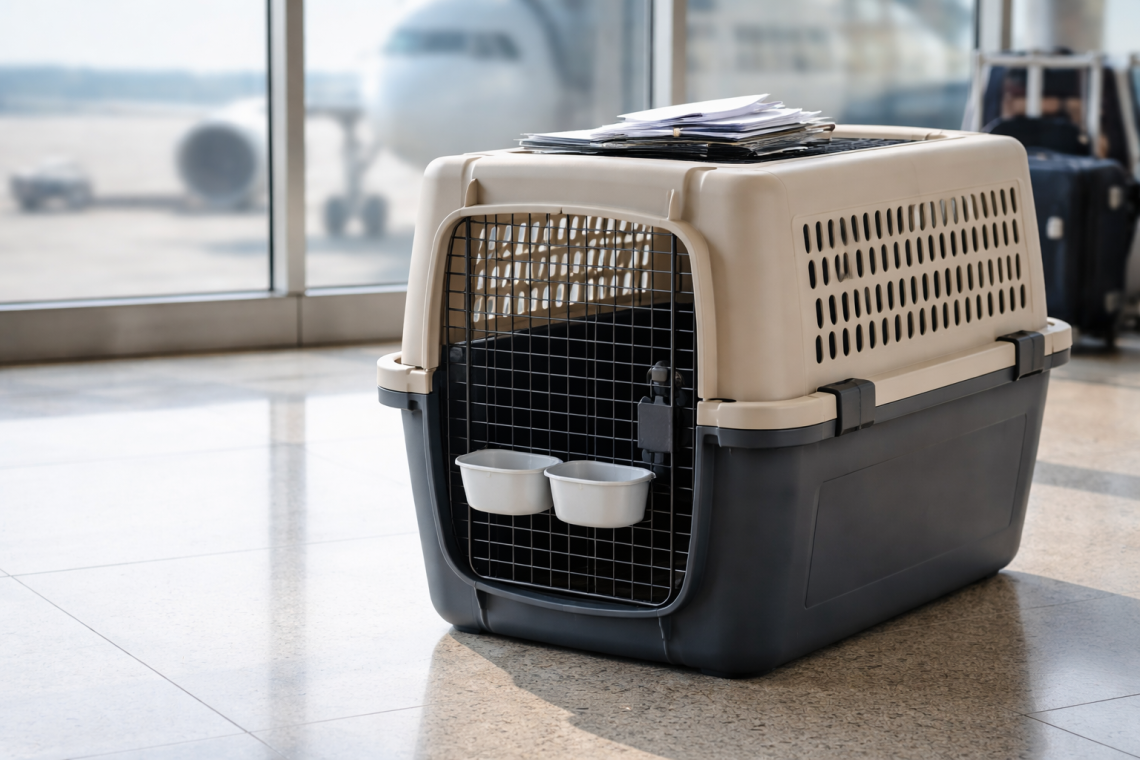
Moving to Spain with Pets
Moving to Spain with pets has easily become the most emotional and complicated part of our relocation journey. I expected paperwork. I expected logistics. I did not expect the deep stress that comes with figuring out how to safely transport an 11-year-old dog across the ocean.
He’s slightly over 20 pounds. He has a few health issues. And he has intense anxiety. The health concerns are manageable and won’t stop him from traveling. But his anxiety? That’s what keeps me up at night.
When people talk about moving internationally, they focus on visas, housing, and jobs. But moving to Spain with pets adds a completely different layer of responsibility. This isn’t just cargo. This is family.
Step One: The ISO-Compliant Microchip
One of the first things I learned about moving to Spain with pets is that the order of steps matters. You cannot just show up at the airport with vaccination records and hope for the best.
Our dog does not currently have a microchip, so we are fixing that next week. Spain, like all European Union countries, requires an ISO 11784/11785 compliant microchip. Without it, your pet cannot legally enter.
According to the European Commission’s pet travel regulations, the microchip must be implanted before the rabies vaccine is administered. If the rabies vaccine comes first, it won’t count.
That detail alone could derail your timeline. For anyone moving to Spain with pets, this is the foundation of everything else.
Step Two: Rabies Vaccine After the Microchip
After the microchip appointment, the next step is the rabies vaccine. Even if your dog already has one, it must be given after the microchip so the chip number appears on the vaccination record.
This part surprised me. I thought we were up to date. But for moving to Spain with pets, timing is critical.
Once the rabies shot is administered, there is a required waiting period before travel. That means planning months ahead is not optional. If you’re considering moving to Spain with pets, start earlier than you think you need to.
Step Three: The USDA Health Certificate
This step feels like the most nerve-wracking.
Within 10 days before arrival in the European Union, your dog must have a veterinary exam and receive a USDA-endorsed health certificate. Not just a regular vet note. It must be officially endorsed.
The process is explained through the USDA APHIS pet travel guidance, and it’s very specific. Your vet completes the paperwork, and then it must be endorsed by the USDA.
The 10-day window is strict. If you miss it, you risk denial of entry.
When moving to Spain with pets, this timing coordination feels like solving a complicated puzzle while also managing flights, housing, and the rest of life.
The In-Cabin Cutoff Problem
Here’s where our situation gets complicated.
Many airlines allow small dogs to travel in-cabin if they are under 20 pounds, including their carrier. Our dog is just slightly over that limit. Close enough to be frustrating. Not close enough to qualify.
Because of that, moving to Spain with pets for us likely means he will travel in the cargo hold or through a specialized transport service.
That word “cargo” makes my stomach drop. Even though airlines have strict regulations for live animals, it still feels scary when you have an anxious senior dog.
Considering a Pet Transport Company
I’ve been contacting professional pet relocation companies, and most quotes are around $3,000.
At first, I had sticker shock. But the more I research moving to Spain with pets, the more I understand why.
These companies handle:
- Flight booking logistics
- Crate compliance
- Veterinary paperwork coordination
- Customs clearance
- Real-time monitoring
They know the regulations inside and out. For a healthy, calm dog, maybe I’d attempt it myself. But with an anxious 11-year-old dog, the peace of mind might be worth every dollar.
Moving to Spain with pets is not just about cost. It’s about safety and reducing stress—for both the dog and us.
Managing Anxiety in an Older Dog
This is the part I worry about the most.
Our dog has what I can only describe as extreme travel anxiety. Car rides are hard. New environments are overwhelming. Loud noises trigger panic.
When moving to Spain with pets, especially senior pets, emotional preparation matters just as much as paperwork.
We are talking with our vet about safe anti-anxiety options for travel day. We’re also practicing longer crate sessions at home so he associates the crate with safety, not fear.
I’ve learned that sedation is often discouraged during flights because it can affect breathing. So everything must be discussed carefully with a veterinarian.
The goal is not just to get him there. The goal is to get him there safely.
The Emotional Weight of Responsibility
No one talks about this part enough.
Moving to Spain with pets carries emotional weight. I feel responsible for every detail. Every form. Every timing requirement. Every ounce over the airline limit.
He has trusted us for 11 years. Now we are asking him to trust us through a massive change.
That responsibility is heavy.
At times, the process has felt exhausting. Between microchip scheduling, vaccine timing, transport quotes, and USDA documentation, it’s easy to feel overwhelmed.
But then I remind myself why we’re doing this. He will have sunshine. Slower walks. A new backyard. A calmer lifestyle. And we will all be together.
Practical Tips I’ve Learned So Far
If you are thinking about moving to Spain with pets, here are a few things I wish I had known sooner.
- Start early. Earlier than feels necessary.
- Double-check airline weight limits including the carrier.
- Confirm your microchip is ISO compliant before vaccinating.
- Keep copies of every document digitally and printed.
- Talk openly with your vet about anxiety and travel safety.
Each step builds on the previous one. Missing one detail can create major delays.
Is It Worth It?
Even with the stress, yes.
Moving to Spain with pets is complicated. It’s paperwork-heavy. It’s expensive. It’s emotionally draining.
But they are part of our family story.
I don’t want to start this new chapter in Spain without him. The thought of walking through Spanish streets, sitting at outdoor cafés, and building our new life without our dog just doesn’t feel right.
So we push through the exhaustion. We make the appointments. We research transport companies. We prepare him slowly.
Because moving to Spain with pets isn’t just about relocation rules. It’s about loyalty. It’s about commitment. It’s about making sure every member of your family arrives safely.
If you are going through this too, I would love to hear your experience. What has surprised you? What has helped you most? Let’s share what we’re learning so others feel less alone in the process.
We’re still in the middle of it. Still figuring it out. Still taking it one step at a time.
But one thing is certain: our dog is coming with us.


You May Also Like

The Hidden Must-Know Paperwork Secrets for a Stress-Free Move Abroad

Do You Need to Learn Spanish to Move to Spain?